Chapter One—Shift (This novel will be published by Galleon Books soon)
Galen Sinclair heaved, his mouth bubbling with the salty, metallic taste of blood; he felt a rush of fear, knew that he hadn’t been breathing.
His eyes fluttered, closed again. Nothing. The night was like pitch, with only the soft chirping of a few cold crickets to break the silence.
His senses reached out, found nothing but misery. He could feel pain radiating from his face, the dried blood that covered his lips and chin cracking as he moved his head. It was damp, and every inch of his body felt cold and clammy. He wasn’t ready for the fresh wave of pain that engulfed him as he tried to roll over. It took his breath away. Ribs. He had broken ribs, which explained why it was so hard to breathe. He wondered if he had flown free of the car in an accident, if he and his dad…
No… Of course not.
Galen gathered himself. He was battered and bloody, that much was clear. He was face down against something hard, and wet with his blood. Wood. Varnished wood. A glimmer of memory flared, then died. He listened, and underneath the quiet song of crickets, he heard the whisper of a river.
And there… Rocking! It was almost imperceptible, but now Galen could feel the gentle cadence of water.
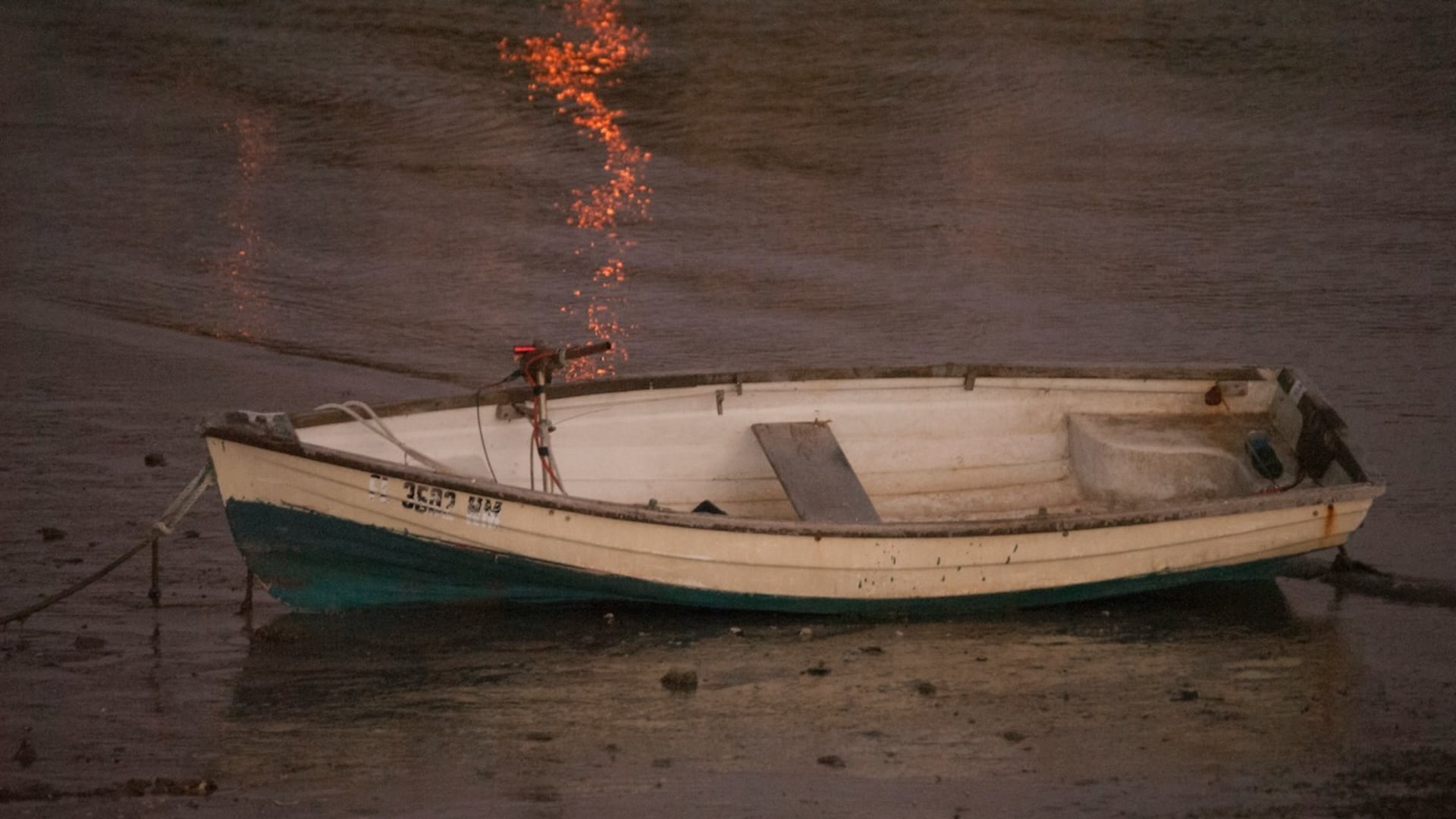
A boat. He was on a small boat.
Slowly, the memory formed, nothing more than flotsam at first, but as pieces accumulated, he remembered.
A rowboat. He’d borrowed Old Man MacNeil’s boat so he could get away from the bullshit. The relentless, unending bullshit. He’d rowed with abandon until his arms and shoulders burned with fatigue, and he drifted away from his new home in Galashiels, Scotland.
Then Galen had tried to purge his anguish. He stood and, perching his feet confidently on the rocking wooden frame, assumed a deep kiba-dachi—a horse stance—so he could practice the three Tekki katas from Shotokan karate as he floated down river.
Today, a swollen Tweed challenged his balance; most would have ended up in the drink. But Galen was confident in his abilities, and it was as if his bare feet were glued to the narrow frame, just three inches wide. His arms flew through the kata movements—blocks, strikes, combination attacks. Precise, fast, devastating. As soon as Tekki Shodan was finished, he moved to Tekki Nidan, and then Tekki Sandan. After thirty-five minutes, his shirt pasted to his back, and his legs shaking with effort, he stepped down.
He remembered drinking heavily from a water bottle. He welcomed the slow drip of peacefulness. He was a survivor, and this is how he survived. When he was ready, Galen again assumed a kiba-dachi, and practiced the Tekki katas to exhaustion.
None of that explained why he now found himself crusted with dried blood, but he couldn’t decipher that mystery with his face pressed up against an old boat. He rolled over on the third try, the stab of pain so intense that nausea swamped him. Steeling himself, he sat up slowly, and realized the back of his head ached. His hair was matted with blood clumped around a golf-ball sized lump.
The night was deep and the stars thick. He could see the spine of the Milky Way stretching off into the distance to where tall conifers blocked his sight, and a wave of dizziness brought his eyes back to his chest.
Galen eased to his feet, bringing vertigo and a wave of retching that doubled him, for it felt like a dagger through his ribs. After a few minutes, he felt slightly more like himself. Through force of will, he climbed out of the boat, which had become wedged in a long, shallow pool, landing in bracingly cold knee-deep water.
He found the rope, freed the boat from the rocks, and secured it to a strong young tree trunk. Then, his lower half numb, his upper half throbbing, he kneeled in a dense thicket, collapsed, and let his mind drift.
He must have meandered down the Tweed for hours. It was mid-afternoon when he’d taken the craft, but now the spring darkness was complete, the only light shimmering down from the constellations. The stars seemed unnaturally bright, but perhaps he was concussed, for his thought processes were glacial. He felt odd. His head was floating, his heart fluttering.
Gran would be frantic. Or she might not even realize he wasn’t home.
He lay immobile. He needed help, but where could he find it in the middle of the night? Maybe he should let sleep take him and wait for morning. He was so tired, and fought against closing his eyes.
The sweetness of slumber—or was it oblivion—felt like a delicious kiss.
But faint sounds drifted through the woods. Far ahead, he could hear… what? Music? That wasn’t quite it. The breeze carried murmurs, but then it ebbed to a low hum. Was he hallucinating? Galen shook his head to clear it, and regretted his stupidity as his brain pinged around in his skull. Still the breeze beckoned him. He began crawling, then struggled to his feet, and lurched onward through the forest. He threw up again, ribs excruciating.
He spotted a light winking through the trees, two football pitches away. Each step was hard won. The melody pulled him forward. Vaguely, Galen was aware of smoke from a fire, and it seemed a fragrance more beautiful than anything he’d ever inhaled.
He came to a clearing, with a cottage maybe three hundred feet away. It was large and homespun, with uneven logs visible even in the deep night. He could see a coop in the distance, and stumbled through horse shit in his bare feet, but hardly noticed. He didn’t see a car, nor any power lines. Galen cursed. Some crofters saw no need for modern conveniences.
Through a rough window, flames danced in a hearth. Dogs barked in warning. He struggled now, darkness nearly overtaking him. Just a few more steps. He knocked on the weatherbeaten door, but worried no one would answer, so he fumbled the rustic latch, and stumbled forward.
The entryway was cluttered, and he just avoided smacking his head on a beam. A rough bench and a number of sturdy walking sticks sat inside the door. The room was dimly lit by candles flickering in the main room, but Galen’s attention was arrested by the crofter’s commanding presence.
This scarecrow of a man sent his head spinning again. He was old, but vital, and his long ruddy-white hair seemed suited to his dark, thickly woven grey robe, belted at the waist. He was spry and at the ready, stepping closer with a stout stick to strike. The dogs snarled, crouching as if to spring, but stayed behind the man. Without thinking, Galen raised his hands defensively, instinct overcoming his fog.
“Who in the devil are you?” the old man said, his voice strong and resonating. “Ah, you’ve hurt yourself. That’s most inconvenient.”
None of it made sense. Galen felt darkness encroach, but managed to croak— “Gandalf. You’re Gandalf!“
Then his legs failed, and he fell. But the old man was quick, and caught Galen in his arms. He staggered slightly, but not from the lad’s weight. He felt a physical shock, an intense jolt that made him gasp, and snatched the air from his lungs.
The old man half-carried Galen into an adjoining room—his now-silent dogs at his heels—and laid him on a compact bed. Then he fetched a lantern and blankets. He pulled off the lad’s odd, blood-stained shirt, probed his broken ribs, and felt his organs for damage. His nose was obviously broken, and blood had even soaked into his strange blue trousers, but his pulse was strong. The lad would be fine. Erasmus covered him with warm wool blankets. With a skill and economy garnered through long practice, the old man administered a sleeping draught that Galen choked down without waking. Then he cleaned away the blood with a cloth that he rinsed in a stone bowl, and realigned the nose with a grinding crunch, which again made Galen groan, but not wake.
With his guest now sound, he leaned against the door frame. The old man was shaking. He looked down at his hands, and willed them to be still.
Could this be his moment? He’d been lost for so long that even one so faithful nursed doubts that he dare not speak aloud. He focused on breathing, on stilling his heart, creating the conditions for success this time.
If nothing else, these many years had taught him a dark kind of patience. He seized a thick candle from his writing desk, then moved to the main room’s far corner. He threw aside a threadbare rug to reveal a trap door. The hinges creaked when pulled, and the old man lifted his billowing robe to navigate the treacherous spiral staircase. He was deep in his cups, so he moved cautiously. Each step left a footprint in the dust, and cobwebs grabbed at his hair. One dog followed, the other remained upstairs.
The cold, dank cellar was finished in rough, heavy stones on all four walls. It ran the length of the cabin, with several broad beams supporting the rooms above. The near corner was given to empty oak puncheons. The old man walked confidently to the cellar’s only other distinguishing feature, a ceremonial dais opposite the staircase. Thirty-one years since his last aborted attempt. Stonework surrounded—and presented—a thick white candle decorated with elaborate dusky blue runes. It was unlit now. To one side sat a carved staff, perhaps seven feet in length, that was beautiful in its wooden simplicity. It, too, was covered in dust.
The old man reached forward, hand closing tightly on the staff and, as he brought it near, he seemed to grow in stature, as if remembering a former strength. “Let’s see, how does this go?” he mumbled. But he knew the words, as clearly as if he recited them every morning before breaking his fast.
He focused on the incantation, feeling the energies ebb and flow. When he failed, he called them forth again. And again. And again. It was exhausting, and his luxuriant eyebrows knitted in deep concentration. Sweat beaded his face, but he did not take note, nor waiver in his recitation. Then he felt the dam burst, found the answer he had sought, and he sank to one knee, utterly spent, bowed deep with something that was both wondrously uplifting—and unbearably heavy. He was hopeful. And frightened.
He opened his eyes. It was as he’d known it would be, so he stood tall, and spoke again.
“As the Last of my kind, I call forth the Light of the First,” he commanded. The candle held by the old man was snuffed, but the ancient cellar stones shimmered. The candle on the dais flickered, then flared a deep emerald as the runes changed to that shade.
The next words were his alone, his tone at times relieved, at times aggrieved, for he had been abandoned and lost. The flame steadied when his oath was made, and the old man finally smiled, a crooked smile tinged with regret.
He turned to his dog. “Gandalf. So strange! Do you even remember your grandsire, Geniver? Have you been telling secrets on your adventures?”
Geniver yipped.
With his staff for support, he climbed wearily up the stairs, Geniver bringing up the rear. Then he closed the trap door. He paused before entering Galen’s room, but the lad hadn’t moved an inch, though he called once for his mother.
So young!
It all felt so wrong. The old man pulled a seat beside the bed, laid his hand across Galen’s brow. Yes, it was there, even stronger than before.
“I am Erasmus,” he said, wondering if the lad could hear.
He smiled, a kind, sad smile, as Galen settled on to his side.
“We shall have much to discuss when you wake.”